Less paperwork, fewer callbacks: the app your ERP is missing
Your technicians stop filling in paper forms. Your office stops typing them up again. And your customers look up their own order status instead of calling you. We build exactly that app on top of the system you already run – live in weeks, hosted in Europe.
Discuss your app ideaAn add-on to the system you already have
We do not replace your ERP. We put an app on top of it – for the one job it cannot do today.
Field service
Technicians see their jobs on the phone, record hours and materials on site, take photos and get a signature. The report is in the ERP before the van leaves the yard.
Warehouse and logistics
Scanning, stock counts, loading lists – done on a phone or handheld instead of on paper, booked straight into the system.
Apps your customers use
Order status, appointments, documents, configurators. Your customers help themselves instead of calling – and everything stays in your system.
And when more is needed: an app can take AI along (calculate, suggest, recognise), read machine and IoT data, or bring telematics from vehicles and equipment into the picture. How we connect ERP, AI and IoT for that is described on our page ERP integration for AI and IoT.
What your customers see instead of calling you
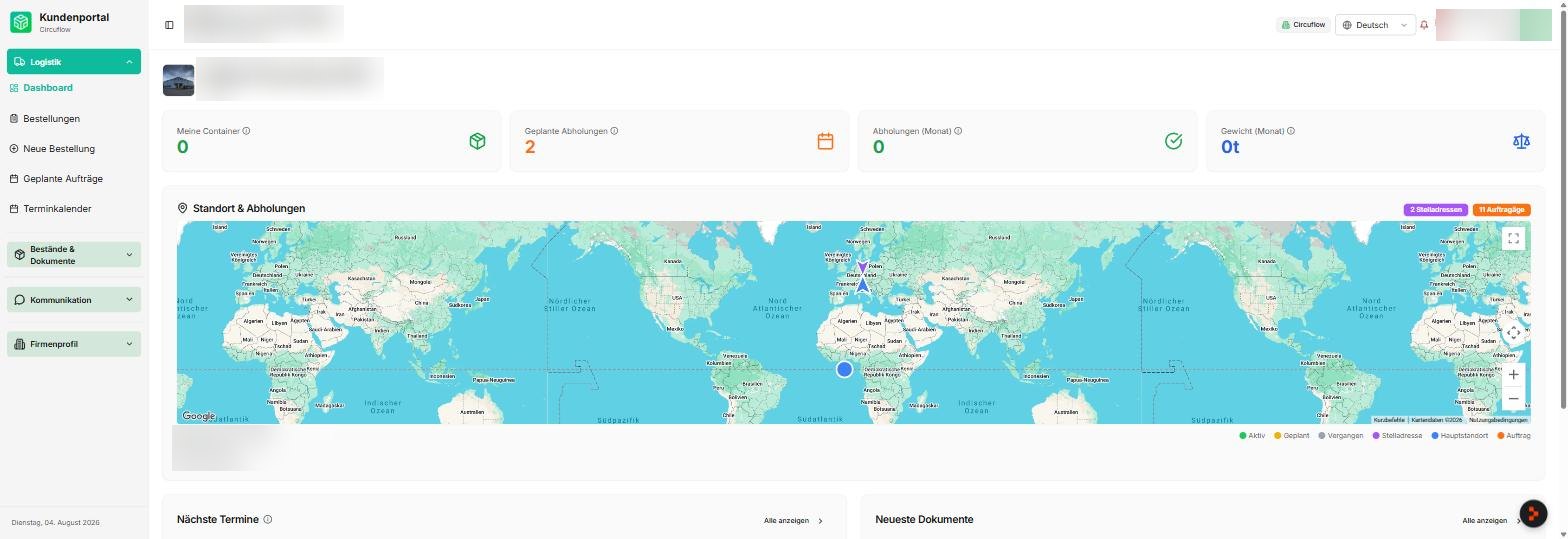
A live example: the customer portal we built for Circuflow. Orders, appointments, documents and locations in one place – customers help themselves, around the clock. Customer and contact names blurred.
Speed and security aren't a contradiction
AI-assisted development makes custom software possible in days today, where months used to be needed. But speed without discipline creates security gaps and maintenance nightmares – something you can't afford. That's why we combine both: the speed of AI-assisted development with the discipline of 18 years of professional software projects. You don't get a hastily assembled point solution, but a secured application integrated into your system landscape.

“Fast development doesn't mean thrown together for us: every Mobile app goes through our quality assurance before it reaches you.”
How your app comes to life
1. Requirements workshop – one day
We understand your process, define the core of the app, and determine what the first prototype needs to do. You get a clear scope at a fixed price.
2. Prototype in days, not months
AI-assisted, a clickable prototype emerges that your team can try out immediately. Corrections happen early, while they're still cheap – not after six months of specifications.
3. Professional safeguards
Before anything goes live: architecture review, automated tests, security check, GDPR check, and code review by experienced developers. For us, speed never replaces diligence.
4. Secure operations and further development
Your app runs GDPR-compliant in European data centers or on-premises at your site. We handle monitoring, maintenance, and further development under clear agreements.
What we build for you
Product configurators
Make complex products easy to configure – with pricing logic, planning and consumption calculators, connected directly to your ERP and webshop. Your customers plan precisely, your sales team saves hours per quote.
Customer and self-service portals
Orders, documents, tickets, and a knowledge base in one portal: your customers help themselves, and your support team is measurably relieved.
Mobile apps and internal tools
From warehouse scanners to field-service apps: we choose the right tool for the use case and deliver apps your employees actually use – integrated, not isolated.
Dashboards and analytics
Built on your data platform, these analytics and control cockpits give you numbers you can trust – every figure traceable back to its source.
From our own workshop: the Circuflow driver and customer app
Circuflow is our own solution for the circular economy. Two apps sit on top of it: drivers get their tour on the phone and confirm each pickup on site, and customers order, track and ask questions themselves – without a single phone call to the office.
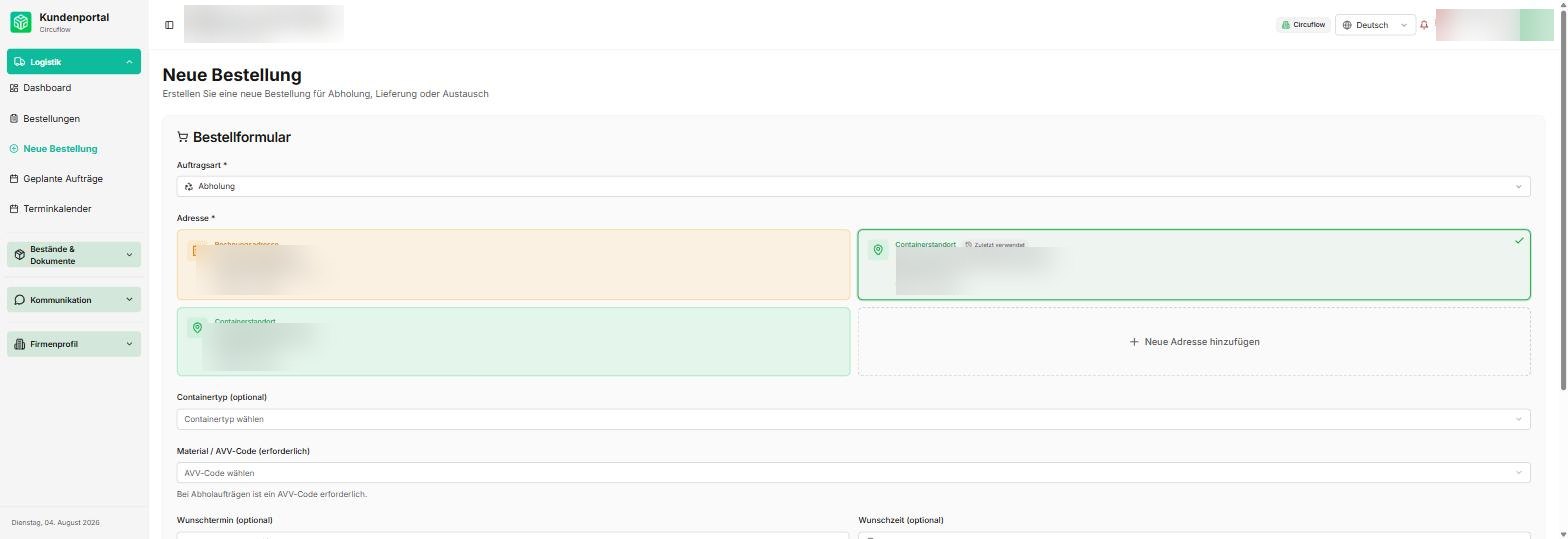
Customers place their own orders – type of job, address, material, preferred date.
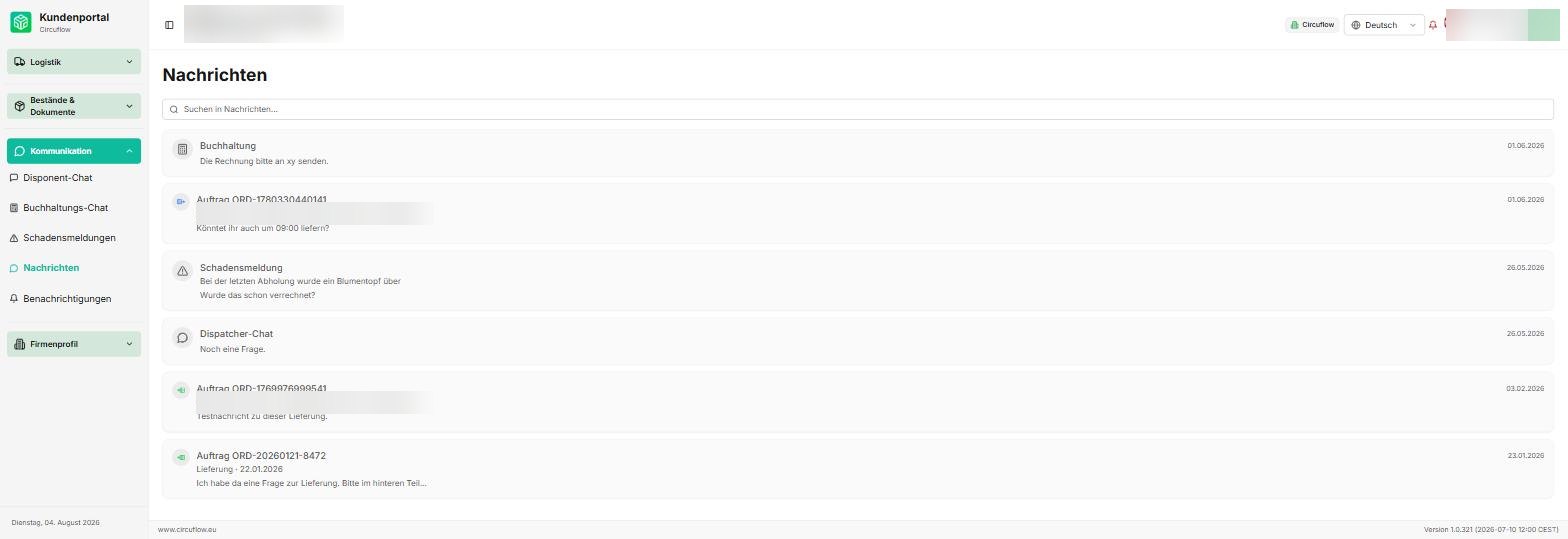
Questions land on the order, not in someone's inbox – dispatch, accounting and damage reports in one thread.
Views from our demo system, customer and contact names blurred.
Mobile app in action: the CircuData Cockpit
A mobile app doesn't have to stop at the interface: we built the CircuData Cockpit as a data cockpit for an entire platform – it makes data flows visible and shows syncs, error rates, and latencies in real time. Here too: productive in weeks, cleanly integrated, and expandable at any time.
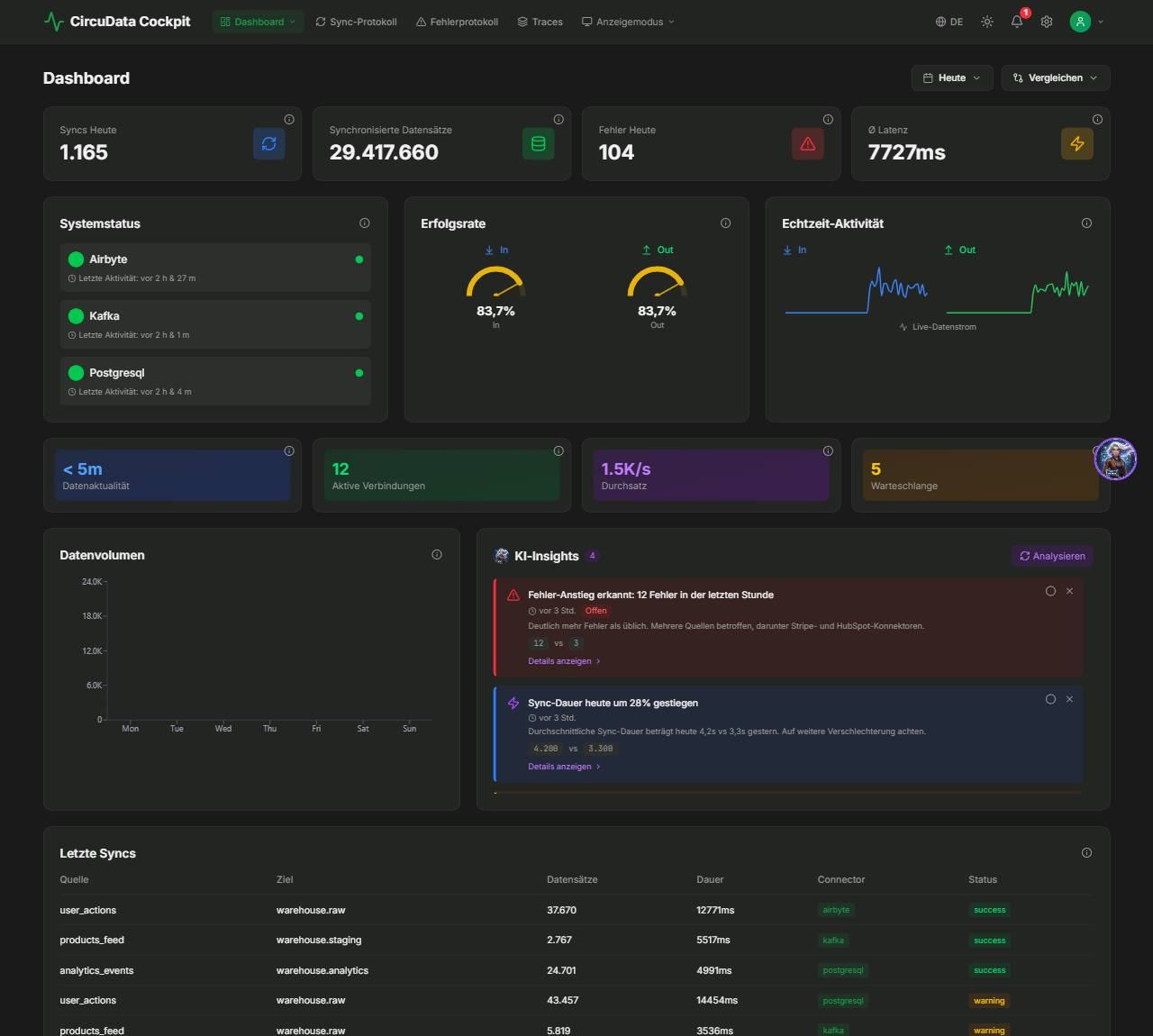
CircuData Cockpit: AI data cockpit as a mobile app – view from our demo system with sample data.
From idea to clickable prototype
Start with the requirements workshop at a fixed price: after the first prototype, you decide whether and how to proceed – with full code ownership and no dependency.
Discuss your app ideaFrequently Asked Questions
What is AI-assisted development – and is it safe?
Our developers use AI tools to build applications in a fraction of the usual time. This is made safe by professional guardrails: architecture review, automated tests, security checks, and code review by experienced developers. The speed comes from AI – the reliability comes from our professionals.
How quickly is an app actually ready to use?
You typically see a clickable prototype within a week. Production-ready applications, including integration, testing, and safeguards, go live after a few weeks depending on scope – not months.
Who owns the code?
You do. You receive the complete source code and documentation. No proprietary platform dependencies, no licensing traps – you can continue working with a different provider or in-house at any time.
How is the app integrated into our systems?
Mobile apps unfold their value through integration: we connect your app directly with Odoo ERP, HubSpot CRM, your webshop, or your data platform – through clean interfaces instead of data silos. This way, all systems work with the same reliable data.
Where does the app run – and what happens after go-live?
Hosting is GDPR-compliant in European data centers or, on request, on-premises at your site. After go-live, we take over operations, monitoring, and further development on request, under clear agreements – your app stays secure and up to date.
What does a mobile app cost?
The requirements workshop and the first prototype have a fixed price. After that, you receive a transparent quote for the production-ready implementation – calculable in phases, with no surprises. Thanks to AI-assisted development, costs are significantly lower than classic custom development.
How do you ensure data protection and GDPR compliance?
Your app runs on European infrastructure, and personal data stays within the EU. We work with a data processing agreement, role-based permissions, and documented deletion concepts – and coordinate the setup with your data protection officer if needed.
Can you take over and further develop an existing app?
Yes. We start with a code audit, document the current state, and then take over operations and further development. This also works if the original provider is no longer available.
Does a mobile app replace our ERP or CRM?
No – it complements it. Mobile apps close the gaps that standard software leaves open: special configurators, portals, or specialized processes. The data stays authoritative in Odoo, HubSpot, or your existing system.
What happens if our requirements change later?
That's the normal case – and that's exactly what we build modularly for. New requirements are planned as extensions and added in short iterations, without needing to rebuild the existing app.